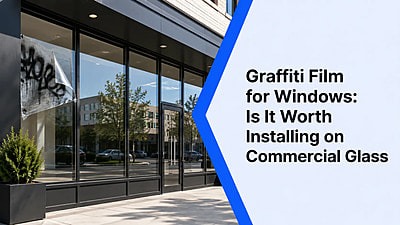
Commercial glass creates an open, modern appearance and helps storefronts attract attention. However, large windows, glass doors, mirrors, and display cases are also vulnerable to scratches, paint, markers, and intentional etching.
Graffiti film for windows creates a replaceable barrier over commercial glass. Instead of allowing surface damage to reach the original pane, the film takes the impact first. If it becomes scratched or vandalized, a professional can remove and replace the affected film without replacing the entire piece of glass.
Is it worth installing? For businesses with expensive glass, high pedestrian traffic, previous vandalism, or publicly accessible windows, the potential savings and faster recovery can justify the investment.
What Is Graffiti Film for Windows?
Graffiti film is a clear polyester film applied to glass and other compatible smooth surfaces. It is commonly used on storefront windows, glass doors, elevator panels, mirrors, display cases, and interior partitions.
The film is known as a sacrificial layer because it is designed to be replaced after it has been damaged. When a vandal uses a key, blade, marker, spray paint, or etching material, the protective film receives the damage before the underlying glass.
Professional anti-graffiti film installation can protect commercial surfaces without significantly changing their appearance or blocking storefront visibility.
What Types of Damage Can Graffiti Film Help Prevent?
Scratches and Surface Abrasion
Publicly accessible glass can be scratched by keys, tools, shopping carts, equipment, jewelry, and repeated daily contact. Intentional scratching can leave highly visible lines that are difficult or impossible to polish out of untreated glass.
Graffiti film covers the original surface. A sharp object may mark or cut the film while leaving the glass underneath protected, provided the damage does not penetrate the complete protective layer.
Spray Paint and Permanent Markers
Paint and marker graffiti can damage a business’s appearance and create an immediate maintenance problem. A protective film prevents these materials from directly contacting the original glass.
Some paint and marker residue may be removable using products approved by the film manufacturer. If cleaning cannot restore the surface, the damaged film can be replaced.
Acid and Mechanical Etching
Etching is more serious than ordinary paint because it physically alters the exposed surface. Acid-based graffiti can create cloudy or uneven marks, while mechanical etching cuts visible lines into glass.
When film covers the surface, the etching affects the replaceable layer first. Severely damaged film should be inspected and replaced promptly before additional exposure reaches the original glass.
Everyday Commercial Wear
Not all damage is intentional. Glass near entrances, service counters, shopping carts, elevators, and narrow walkways experiences frequent contact. Protective film can help reduce the long-term effect of scuffs, minor scratches, and surface abrasion.
Is Graffiti Film Worth the Cost?
Graffiti film is most valuable when replacing the protected surface would be significantly more expensive or disruptive than replacing the film.
Consider the following factors before deciding:
Value and Size of the Glass
Large storefront panels, custom-cut glass, architectural glazing, and oversized mirrors can be expensive to replace. Installation may also require specialized labor, equipment, permits, or restricted access.
Protecting high-value glass provides a stronger financial case than covering a small, inexpensive pane that can be replaced easily.
Level of Public Exposure
Street-facing windows, transit-adjacent properties, parking structures, elevators, schools, and public buildings face greater exposure than glass located inside a restricted office.
Properties with unrestricted pedestrian access generally receive more value from protective film.
History of Vandalism
If the property or surrounding area has experienced repeated scratches, paint, or etching, installing film is a practical risk-management decision. Even one avoided glass replacement may offset a substantial portion of the installation expense.
Cost of Business Disruption
Glass replacement is not limited to the price of the pane. A business may also need to secure the area, move merchandise, restrict customer access, coordinate contractors, and wait for custom glass.
Replacing film is usually less disruptive than replacing an entire window. Learn more about how protective film may reduce glass replacement costs.
Importance of Property Appearance
Visible graffiti can discourage customers and affect how they perceive a business. Retailers, restaurants, hotels, medical offices, and professional buildings depend heavily on presenting a clean exterior.
A replaceable film allows damaged surfaces to be restored without waiting for replacement glass to be manufactured and delivered.
Commercial Glass With Film vs. Unprotected Glass
| Consideration | Glass With Graffiti Film | Unprotected Glass |
| Scratch protection | Film receives the initial damage | Damage reaches the glass |
| Paint and marker contact | Contaminants contact the film | Contaminants contact the glass |
| Etching protection | Film acts as a sacrificial layer | Surface may be permanently etched |
| Response after damage | Clean or replace the film | Polish, repair, or replace the glass |
| Business disruption | Generally lower | Potentially higher |
| Appearance | Clear film preserves visibility | Original glass remains fully exposed |
The film does not make a window indestructible. A determined person can cut through it, and severe impact may damage both the film and glass. Its value comes from reducing the likelihood that ordinary surface vandalism will require complete glass replacement.
Where Is Graffiti Film Most Useful?
Graffiti film for windows is particularly useful in locations that combine expensive surfaces with frequent public access.
Common applications include:
- Retail storefront windows
- Shopping centers
- Restaurants and cafés
- Hotels
- Office-building entrances
- Schools and universities
- Medical facilities
- Government buildings
- Public transportation facilities
- Parking garages
- Elevator doors and interiors
- Mirrors and display cases
Businesses evaluating additional performance upgrades can combine surface protection with other commercial window tinting services, depending on their needs for heat control, glare reduction, privacy, or UV protection.
When Might Graffiti Film Not Be Necessary?
Protective film is not automatically the right investment for every window.
It may be less necessary when:
- The glass is located in a secured, inaccessible area.
- The property has little pedestrian traffic.
- The pane is small and inexpensive to replace.
- There is no history of scratching or vandalism nearby.
- The surface material is incompatible with the selected film.
- The primary concern is impact or broken-glass retention rather than surface damage.
If forced entry or shattered glass is the main concern, commercial security window film may be more suitable. Anti-graffiti and security films perform different jobs, so the product should match the actual risk.
What Should Businesses Ask Before Installation?
Before approving an installation, ask the contractor:
- Is the film suitable for the existing glass or surface?
- Is it designed for interior or exterior application?
- How will damaged sections be removed and replaced?
- What cleaning products are safe to use?
- Does the product include a manufacturer’s warranty?
- How will seams and edges be positioned?
- Which surfaces should be prioritized?
- Can the film be combined with solar-control or security solutions?
A professional site assessment can identify the most vulnerable surfaces instead of applying film everywhere without a clear financial reason.
Common Mistakes to Avoid
Covering Every Window Without Assessing Risk
Prioritize exposed, high-value, and frequently damaged surfaces. A targeted installation can provide better value than covering low-risk glass.
Treating the Film as Permanent
Graffiti film is replaceable by design. Once it has deep cuts, severe etching, lifting edges, or permanent paint damage, it should be evaluated for replacement.
Using Harsh Cleaning Products
Abrasive pads, razor blades, and unapproved chemicals can damage the film. Maintenance teams should follow the manufacturer’s cleaning instructions.
Confusing Surface Protection With Security
Graffiti film protects against surface vandalism. It is not primarily designed to hold shattered glass together or stop forced entry.
Choosing DIY Installation for Large Glass
Dust, trapped debris, uneven edges, and poor surface preparation can affect clarity and performance. Commercial glazing requires accurate measurements and professional installation.
Protect Commercial Glass Before It Becomes an Expense
Graffiti film for windows can be a worthwhile investment when a commercial property has expensive glass, frequent public access, or a meaningful risk of scratches and vandalism. It provides a replaceable barrier that can reduce repair costs, limit disruption, and help businesses restore damaged surfaces more efficiently.
California Tint Crew installs commercial protective films for storefronts, offices, elevators, public buildings, and other properties throughout Orange County and Los Angeles County.
Contact California Tint Crew today to schedule a professional assessment and determine whether graffiti film is right for your commercial glass.
Frequently Asked Questions
1. Does graffiti film make commercial glass scratch-proof?
No. The film provides a replaceable protective layer that takes the initial damage. A deep cut or severe impact may penetrate the film and reach the glass.
2. Can graffiti film be removed without damaging glass?
Professionally installed film can generally be removed from compatible glass. Removal should be completed carefully to avoid adhesive residue or surface damage.
3. Will graffiti film affect storefront visibility?
Quality clear film should preserve most of the glass’s original visibility. Product quality, surface preparation, and installation technique affect the final appearance.
4. How often does graffiti film need to be replaced?
There is no fixed replacement schedule. Its service life depends on exposure, cleaning practices, environmental conditions, and the frequency of vandalism. Damaged film may require immediate replacement.
5. Is graffiti film worth installing if vandalism has never occurred?
It may still be worthwhile when the glass is expensive, publicly accessible, or difficult to replace. However, businesses with low-risk and inexpensive glazing may receive less financial benefit.