Glass helps commercial properties feel open, modern, and inviting. However, exposed glass is also vulnerable to scratches, paint, permanent markers, acid etching, and everyday surface damage.
Once the original glass is deeply scratched or chemically etched, cleaning may not restore it. Replacing a large storefront panel, mirror, elevator surface, or glass door can be expensive and disruptive.
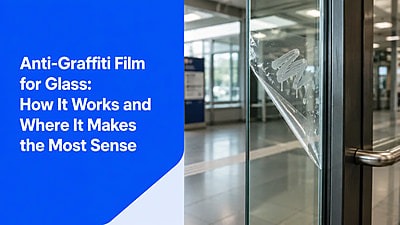
Anti graffiti film for glass creates a clear, replaceable layer over the original surface. Instead of allowing common forms of vandalism to reach the glass immediately, the film absorbs the damage first. When necessary, the damaged film can be removed and replaced without replacing the entire glass panel.
What Is Anti-Graffiti Film for Glass?
Anti-graffiti film is a transparent polyester film designed to protect glass and other compatible smooth surfaces from surface-level damage. It is applied using an adhesive that keeps the film securely bonded while allowing professional removal when replacement becomes necessary.
The film is often called a sacrificial layer. That does not mean it is weak or disposable after minor contact. It means the film is intentionally designed to take scratches, paint, markers, and etching so the more expensive surface underneath has a better chance of remaining intact.
Professional anti-graffiti film can be installed on:
- Storefront windows
- Glass entrance doors
- Mirrors
- Elevator doors and interiors
- Display case
- Interior glass partitions
- Service counters
- Public-facing office windows
- Transit facility surfaces
- Compatible polished metal surfaces
How Does Anti-Graffiti Film Work?
The system works by placing a physical barrier between the exposed environment and the original surface. Keys, blades, paint, markers, and etching materials contact the protective film before reaching the glass.
The protection provided depends on the film’s construction, thickness, installation quality, type of surface, and severity of the damage. Anti-graffiti film does not make glass indestructible, but it can prevent many common incidents from becoming full glass-replacement projects.
The Protective Film Layer
The polyester layer provides resistance against surface abrasion and contamination. It is designed to maintain optical clarity so customers can still see through storefronts, entrance doors, and display windows.
Some films may include coatings that make cleaning certain paints, inks, and adhesives easier. Property owners should check the product specifications rather than assume every film provides identical performance.
The Adhesive Layer
The adhesive keeps the film bonded to the surface during normal use. Proper adhesion is important because loose edges and poorly bonded sections can allow moisture, dirt, or contaminants to collect underneath the film.
A professional installer prepares the surface carefully before installation to reduce visible debris, bubbles, gaps, and premature lifting.
The Replaceable Surface
When damage cannot be safely cleaned, the affected film can be removed. The original glass is then inspected and prepared before a new protective layer is installed.
This replaceable design is the film’s main advantage. It changes the maintenance response from “replace the damaged glass” to “inspect and replace the protective surface.”
How Does It Protect Against Different Types of Damage?
Scratches
Keys, tools, shopping carts, equipment, bags, and deliberate vandalism can leave permanent scratches on exposed glass. Anti-graffiti film receives the initial contact and may prevent the object from reaching the original surface.
A deep cut can penetrate the film, so the product should be described as scratch-resistant rather than scratch-proof.
Spray Paint and Permanent Markers
Paint and ink can create an immediate appearance problem for retail stores, restaurants, offices, and public buildings. Protective film prevents these materials from directly contacting the original glass.
Some graffiti may be removable using an approved cleaner. If cleaning would damage the film or leave permanent staining, the affected film can be replaced.
Acid Etching
Acid-based vandalism chemically damages exposed surfaces and can leave cloudy or uneven marks. Cleaning cannot reverse material that has already been etched away.
When a compatible protective film covers the glass, the chemical contacts the film first. The film may require replacement afterward, but the glass underneath may remain protected if the substance does not penetrate the system.
Mechanical Etching
Mechanical etching occurs when a sharp object is used to carve letters, symbols, or lines into a surface. Anti-graffiti film provides a replaceable layer that can receive this damage before the tool reaches the glass.
Everyday Scuffs and Wear
Commercial surfaces experience damage that is not always intentional. Shopping carts, deliveries, cleaning equipment, bags, jewelry, and repeated contact can gradually affect glass and mirrors.
Installing protective film in high-touch areas can reduce wear and help these surfaces maintain a cleaner appearance.
Where Does Anti-Graffiti Film Make the Most Sense?
Not every glass panel faces the same level of risk. Film delivers the most value when the protected surface is expensive, publicly accessible, difficult to replace, or repeatedly exposed to damage.
Retail Storefronts
Storefront windows are accessible from sidewalks and parking areas, making them common targets for scratches, paint, and etching. Damage can also affect how customers perceive the business.
Retailers can combine surface protection with other storefront window tinting solutions when they also need heat control, glare reduction, or UV protection.
Glass Entrance Doors
Customers, carts, deliveries, and employees interact with entrance doors throughout the day. Film can help protect glass doors from deliberate vandalism and routine abrasion around handles and lower panels.
Elevators
Elevator mirrors, doors, and polished surfaces are frequently touched and can be difficult to monitor continuously. Scratches and etched markings can make an otherwise clean building look poorly maintained.
Protective film is particularly useful in hotels, office buildings, parking structures, residential towers, hospitals, and public facilities with high elevator traffic.
Mirrors
Replacing a large custom mirror can be costly. Protective film may be suitable for mirrors in elevators, gyms, public restrooms, hotels, retail fitting rooms, and commercial lobbies.
The installer must confirm that the selected product is compatible with the mirror and intended application.
Schools and Public Buildings
Schools, libraries, government buildings, and community facilities often contain large areas of publicly accessible glass. These properties can benefit from protecting the most exposed surfaces instead of repeatedly paying for repair or replacement.
Transit and Parking Facilities
Transit stations, waiting areas, parking garages, and pedestrian walkways experience heavy public use. Surfaces in these environments may be exposed to repeated scratches, markers, paint, stickers, and chemical damage.
Display Cases and Interior Partitions
Museums, retail stores, offices, medical practices, and showrooms use glass partitions and display cases to organize spaces without blocking visibility. Protective film can preserve these surfaces while maintaining their clear appearance.
When Does Anti-Graffiti Film Provide the Best Value?
The film generally makes the most financial sense when:
- The glass is large or custom-made.
- Replacement would require specialized labor or equipment.
- The surface is directly accessible to the public.
- The property has experienced previous vandalism.
- Damage would affect customer perception.
- Glass replacement would interrupt business operations.
- The same area requires repeated repairs.
- Mirrors or other specialty surfaces are expensive to replace.
Property owners evaluating the financial benefit can learn more about using film to reduce glass replacement expenses.
When Might It Not Be Necessary?
Anti-graffiti film may provide limited value when the surface is located in a secure area, receives little contact, or can be replaced inexpensively
It may not be the right product when the main concern is shattered glass, storm damage, or forced entry. Those situations may require commercial security window film, an attachment system, upgraded glazing, or a broader security solution.
Anti-graffiti film protects the surface. Security film is primarily designed to help hold broken glass together. Treating them as interchangeable can lead to the wrong product being installed.
What Happens During Professional Installation?
A typical installation includes:
- Inspecting the glass and surrounding frame
- Confirming the surface is compatible with the selected film
- Measuring the installation area
- Removing dirt, adhesive, paint, and other contaminants
- Cutting the film to fit the surface
- Applying the film with the correct installation solution
- Removing excess moisture and air
- Trimming and finishing the edges
- Inspecting the installation for clarity and adhesion
Some temporary visual distortion or moisture may be noticeable while the film cures. The installer should explain the expected curing period and provide cleaning instructions.
How Should Anti-Graffiti Film Be Maintained?
Use soft microfiber cloths, nonabrasive tools, and cleaning products approved for the installed film. Avoid razor blades, scouring pads, rough brushes, and aggressive solvents unless the manufacturer specifically allows them.
The film should be inspected for:
- Deep cut
- Punctures
- Permanent stains
- Cloudy areas
- Peeling edges
- Adhesive failure
- Moisture beneath the film
Damaged film should be evaluated promptly. Delaying replacement after serious damage may leave the original surface exposed.
Is Anti-Graffiti Film the Right Choice for Your Property?
Anti graffiti film for glass makes the most sense on high-value, high-touch, and publicly accessible surfaces. It will not eliminate vandalism, but it can make the consequences more manageable by protecting the original glass with a replaceable layer.
California Tint Crew installs protective and commercial window films for businesses throughout Orange County and Los Angeles County. The team can inspect your surfaces, identify the most vulnerable areas, and recommend film based on the property’s actual risks.
Contact California Tint Crew to request a professional glass assessment and installation estimate.
Frequently Asked Questions
1. Can anti-graffiti film be installed on every type of glass?
Not automatically. Compatibility depends on the glass, coating, surface condition, installation location, and film specifications. A professional should inspect the surface before recommending a product.
2. Can paint and permanent marker be cleaned from the film?
Some paint and marker residue can be removed with approved cleaning products. If safe cleaning does not restore the surface, the damaged film can be replaced.
3. Will anti-graffiti film make glass look cloudy?
Quality clear film should preserve visibility when installed correctly. Poor-quality materials, trapped contamination, unsuitable cleaning products, or incorrect installation can affect clarity.
4. Does anti-graffiti film protect against broken glass?
Its primary purpose is surface protection, not broken-glass retention. A tested safety or security film should be considered when impact protection is the main objective.
5. How often should anti-graffiti film be replaced?
There is no universal schedule. Replacement depends on environmental exposure, cleaning practices, surface traffic, and the amount of vandalism. Deeply cut, etched, stained, or peeling film should be inspected and replaced when necessary.