Scratched, painted, or etched glass can make even a well-maintained property look neglected. For businesses with large storefront windows, glass entrance doors, mirrors, or elevator panels, repairing this damage can also be expensive and disruptive.
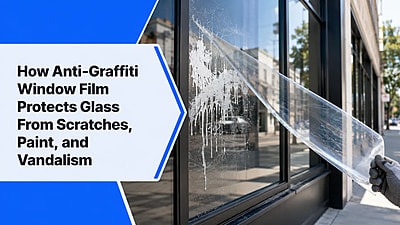
Anti graffiti window film offers a practical way to protect these surfaces. The transparent film creates a replaceable barrier over the original glass. When scratches, paint, markers, or etching damage the film, the affected layer can often be replaced without removing the entire glass panel.
What Is Anti-Graffiti Window Film?
Anti-graffiti window film is a clear polyester film installed directly over glass, mirrors, and other compatible smooth surfaces. It is designed to absorb surface damage while maintaining the glass’s appearance and visibility.
The film is often called a sacrificial layer because it takes the damage instead of the underlying surface. If vandalism occurs, a professional can remove the damaged film, clean and inspect the glass, and install a new protective layer.
Professional anti-graffiti window film can be used on:
- Retail storefronts
- Glass entrance doors
- Office windows
- Elevator interiors
- Mirrors
- Display cases
- Interior glass partitions
- Schools and public buildings
- Parking structures
- Transit facilities
How Does Anti-Graffiti Window Film Work?
The film bonds to the exposed surface using a specialized adhesive. Once installed, it becomes the first surface contacted by keys, tools, paint, markers, and etching materials.
Anti-graffiti film does not make glass impossible to damage. Its purpose is to provide a replaceable protective surface. Performance depends on the film’s quality, thickness, installation, type of vandalism, and amount of force involved.
Protecting Glass From Scratches
Glass in busy areas can be scratched by keys, tools, shopping carts, bags, equipment, and deliberate vandalism. Once a deep scratch reaches the actual glass, polishing may not completely remove it. Replacing the pane may be the only way to restore its appearance.
Anti-graffiti film covers the original surface and receives the initial contact. A sharp object may scratch or cut the film while leaving the glass underneath unaffected, provided the damage does not penetrate the complete film system.
Instead of ordering replacement glass, the property owner can replace the damaged film. This is especially useful for large storefront windows, mirrors, display cases, and elevator panels.
Protecting Glass From Spray Paint and Markers
Spray paint and permanent markers can quickly damage the appearance of a business. Removing them from untreated surfaces may require strong cleaning products, extensive labor, or professional restoration.
Anti-graffiti film creates a barrier that prevents paint and ink from directly contacting the original glass. Depending on the substance and film coating, the graffiti may be removable with an approved cleaning product.
If the paint or marker cannot be safely removed, the affected film can be replaced. Property owners should avoid using unapproved solvents, razor blades, or abrasive pads because they may damage the film, its coating, or the surrounding window frame.
Protecting Glass From Surface Etching
Acid-based graffiti and mechanical etching can cause permanent surface damage. Unlike ordinary paint, etching can leave glass with a cloudy, carved, or uneven appearance that standard cleaning cannot correct.
When anti-graffiti film is installed, the etching material or abrasive tool contacts the protective layer first. The damaged film can then be removed and replaced before the underlying glass becomes permanently affected.
However, deeply cut or penetrated film should be inspected quickly. Leaving compromised film in place may expose the original surface to additional damage.
Protecting High-Touch Surfaces From Everyday Wear
Not every mark is caused by deliberate vandalism. Glass doors, service counters, elevators, and interior partitions experience routine contact throughout the day.
Anti-graffiti film can help protect these surfaces from scuffs, minor scratches, and repeated abrasion. This makes it valuable for high-traffic properties even when intentional vandalism is not a frequent problem.
What Happens When the Film Is Damaged?
One of the main advantages of anti-graffiti film is that damage does not automatically require glass replacement.
The restoration process generally involves:
- Inspecting the film and underlying surface
- Determining whether the damage can be safely cleaned
- Removing the film when replacement is necessary
- Cleaning and preparing the original glass
- Installing a new protective layer
- Inspecting the replacement for clarity and proper adhesion
This process can reduce business disruption and eliminate many of the complications associated with measuring, ordering, delivering, and installing replacement glass.
Property owners can also learn how the film may help reduce glass replacement costs.
Anti-Graffiti Film vs. Security Window Film
Anti-graffiti film and security film may be installed on similar surfaces, but they are designed for different purposes.
| Feature | Anti-Graffiti Film | Security Window Film |
| Main purpose | Surface protection | Broken-glass retention |
| Scratch protection | Yes | Not its primary purpose |
| Paint and marker protection | Yes | Not its primary purpose |
| Replaceable sacrificial layer | Yes | Generally no |
| Holds shattered glass together | Not its main function | Yes |
| Common applications | Storefronts, mirrors and elevators | Windows, doors and vulnerable glazing |
If the primary concern is broken glass or forced-entry resistance, a professionally selected commercial security window film may be more appropriate.
Some properties can benefit from different film systems on different surfaces. A storefront might use anti-graffiti film on exterior-facing glass and security film on vulnerable entrance doors.
Benefits of Anti-Graffiti Film for Commercial Properties
Reduces Glass Replacement Expenses
Replacing architectural glass can involve significant material, labor, transportation, and installation costs. It may also require temporary closures or restricted access around the affected area.
Replacing damaged film is generally more manageable than replacing an entire glass panel. This can make anti-graffiti protection especially valuable for properties that experience repeated vandalism.
Helps Businesses Recover Faster
Visible graffiti can negatively affect how customers perceive a business. Quickly replacing a damaged protective layer allows a property to restore its clean, professional appearance without waiting for custom replacement glass.
Preserves the Appearance of Glass
Quality clear film protects the surface without unnecessarily blocking merchandise displays, exterior views, or natural light. Professional installation helps prevent contamination, uneven trimming, visible bubbles, and poorly finished edges.
Simplifies Property Maintenance
Businesses in high-traffic or vandalism-prone areas can include film inspection and replacement in their maintenance plans. This makes surface damage more predictable and easier to manage.
Anti-graffiti protection can also be combined with other commercial window tinting solutions when a property needs heat reduction, glare control, privacy, or UV protection.
Common Anti-Graffiti Film Mistakes
Assuming the Film Cannot Be Damaged
Anti-graffiti film is supposed to take the damage. A scratched or marked film does not necessarily mean it failed. If the original glass remains protected, the film has performed its intended job.
Using Abrasive Cleaning Products
Razor blades, rough scrubbers, and harsh chemicals can damage the film. Maintenance teams should use manufacturer-approved cleaning products and soft, nonabrasive materials.
Ignoring Cuts and Lifted Edges
Deep cuts, punctures, and lifted edges can allow dirt, moisture, or chemicals to reach the protected surface. Damaged areas should be professionally inspected instead of being left untreated.
Choosing Film Without Checking Compatibility
Glass, mirrors, stainless steel, polycarbonate, and other materials have different installation requirements. A professional should confirm that the selected film is compatible with the intended surface.
Relying on DIY Installation
Dust, incorrect measurements, contaminated adhesive, and uneven trimming can reduce clarity and durability. Large commercial surfaces require careful preparation and precise application.
Expert Tips for Better Glass Protection
- Prioritize street-facing and high-touch surfaces.
- Inspect the film regularly for cuts, lifting, and chemical damage.
- Keep approved cleaning instructions available for maintenance teams.
- Address graffiti quickly rather than allowing contaminants to remain.
- Confirm whether the selected product is intended for interior or exterior use.
- Combine protective film with lighting, cameras, and other security measures.
Protect Your Glass Before Vandalism Happens
Waiting until glass is permanently scratched or etched leaves property owners with fewer and more expensive repair options. Anti graffiti window film provides a replaceable first line of defense that can protect the original surface, simplify maintenance, and reduce the disruption caused by vandalism.
California Tint Crew installs protective window films for storefronts, offices, elevators, public buildings, and other commercial properties throughout Orange County and Los Angeles County.
Contact California Tint Crew today to request an evaluation and find the right protective film for your glass surfaces.
Frequently Asked Questions
1. Can anti-graffiti film stop glass from being scratched?
Anti-graffiti film creates a protective surface that receives the scratch before the glass. Deep or forceful damage may penetrate the film, so it should not be described as completely scratch-proof.
2. Can spray paint be removed from anti-graffiti film?
Some paint and marker damage can be removed using manufacturer-approved cleaning methods. If cleaning would damage the film or leave visible marks, the affected film can be replaced.
3. Does anti-graffiti film change the appearance of glass?
Clear, professionally installed film should preserve much of the glass’s original appearance and visibility. Film quality, surface preparation, and installation technique all affect the final clarity.
4. Is anti-graffiti film the same as security window film?
No. Anti-graffiti film protects surfaces from scratches, paint, markers, and etching. Security window film is primarily designed to hold broken glass together after impact.
5. How long does anti-graffiti film last?
Its service life depends on the product, environment, sun exposure, cleaning practices, and frequency of damage. Film installed in a heavily vandalized or high-traffic location may require earlier replacement.